
How Many Sessions Of Laser Tattoo Removal
Getting a tattoo removed sounds simple until you ask the one question every client wants answered: how long is this actually going to take? In this episode of the Faded Podcast, the team at Studio Kiku breaks down how many sessions of laser tattoo removal a saturated piece really needs, and why rushing the process can leave you with something worse than the tattoo itself. The answer involves your skin, your body, and a tradeoff most studios don't talk about openly.
What you'll walk away with: A clear, honest answer on session counts (9 to 12 for dark, saturated tattoos) and a realistic timeline of one to two years for safe, scar-free removal.
The counterintuitive part: A skilled technician could blast your tattoo off in a single session, but they won't, because the result would be a scar in the exact shape of the original tattoo.
Why it works: The laser shatters pigment quickly, but it's your body that has to absorb and metabolize it. Going gently in early sessions and ramping up as the ink fades works with your biology instead of fighting it.
If you've been quoted a single-digit session count somewhere else, this video explains exactly what you might be trading away to get there. The studio has seen the keloids, the hyperpigmentation, and the scar tissue from clients who came over from faster-but-aggressive providers, and the host doesn't sugarcoat what those shortcuts cost.
Key Moments in the Removal Process
Click any timestamp to jump to that moment in the video.
- ► 0:34 -- "If it's a dark, saturated tattoo, we usually give a general number between 9 and 12 sessions. And that's to safely remove the tattoo."
- ► 1:05 -- "I would have to turn the laser all the way up and I would blow a hole in your skin. We could get the tattoo off, but you're going to be left with a scar."
- ► 2:06 -- "Clients come from other studios and they've been lasered and yeah, the tattoo is gone or it's close to being gone, but there's scar tissue there or there's keloids or there's hyperpigmentation."
- ► 4:06 -- "The laser is very fast at breaking the pigment. The thing we're waiting on is your body."
- ► 4:40 -- "Anything on your torso or upper body, you're going to have better results than you will on any of your fingers, toes, feet."
The Faded Podcast: How Long Laser Tattoo Removal Really Takes
The Question Every Client Asks Walking Through the Door
When you see a very saturated, dark tattoo, it's important to go slowly from the beginning. If you laser it so aggressively, you're going to remove the pigment, but you're going to leave a scar in the same shape of the tattoo that you had. A lot of it comes down to your body. So, why does it take so long?
Welcome to the Faded Podcast. In this episode, I'm going to address one question that we get all the time. The question is, how many sessions is it going to take to remove my tattoo? Or the other question we get, which is kind of related, how long is it going to take to remove this tattoo?
The 9 to 12 Session Standard for Saturated Tattoos
We have clients coming in the studio every single day asking the same question. Usually they get the same answer. If it's a dark, saturated tattoo, we usually give a general number between 9 and 12 sessions. And that's to safely remove the tattoo.
And I always tell people, if you want that thing gone in one session, I can get it off in one session. But I don't think you want that because what that would mean is that I would have to turn the laser all the way up and I would blow a hole in your skin. We could get the tattoo off, but you're going to be left with a scar.
And there are some guys out there and some girls out there who are more concerned about speed and less concerned about the condition of the skin and how it's left after the tattoo removal sessions.
Why Gentle Early Sessions Set Up Better Results
When you see a very saturated, dark tattoo, it's important to go slowly from the beginning. So, what we end up doing is we'll treat it nice and gently in the first few sessions. What we're trying to do is we're trying to break that pigment up. Try to break that pigment up nice and gently.
Get your body going on breaking the pigment down, metabolizing that pigment. And then once the pigment starts fading a little bit, that's when we turn it up. And we don't do it right away. We don't just start right off the bat with the laser jammed up and trying to be a hero right off the bat because that does not end well.
The Damage From Studios That Race the Clock
We've seen it many, many times where clients come from other studios and they've been lasered and yeah, the tattoo is gone or it's close to being gone, but there's scar tissue there or there's keloids or there's hyperpigmentation or hypopigmentation. We've seen it over and over and over again.
And there are some repeat offenders. There's some habitual offenders out there who are doing it over and over. That's the way they treat tattoos. And if that's what you're looking for, that's great. If you're looking for getting rid of the tattoo in a hurry and not really caring about how your skin looks after the fact, then we can tell you where to go. I don't think that's the goal when you're looking to get a tattoo removed.
The Name Tattoo Example: A Scar in the Same Shape
Suppose you have a name on your arm or on your neck and you want to get it removed because obviously you don't want that name on your body anymore. But if you laser it so aggressively, you're going to remove the pigment, but you're going to leave a scar in the same shape of the tattoo that you had.
So instead of going aggressively, it's very important to start off lightly, break that pigment down, let your body start working on it, and as the pigment fades, that's when you increase the settings. And as the pigment fades more, you increase the settings more. That's how we like to do it here at Studio Kiku. And we've seen great results doing it that way.
Yes, it may take you longer than the other place, but you will leave with clean, intact skin, and that's what we want to do. We want your skin to be crispy clean with no remnants of that tattoo whatsoever.
How the Laser Actually Works on Pigment
So, why does it take so long? And I always explain this to clients when they come in. I tell them about the laser and how the laser works and then I talk about the process. So, between how the laser works and the process of the removal, you should be able to kind of figure it out.
The laser, as you probably already know, will penetrate the skin without damaging the skin. It penetrates the skin and it targets the pigment inside the skin. When the pigment shatters, then your body's able to absorb it over time.
Your Body Is the Bottleneck, Not the Laser
And I always tell people, the laser is very fast at breaking the pigment. The thing we're waiting on is your body. If your body is healthy and if you're a healthy active person, you're going to see better results and quicker results than a person who's not healthy and a person who's not active.
A lot of it comes down to your body. So, the more healthy you are, the better results you're going to see. And that's just a plain fact. The laser is fast with breaking down the pigment, but your body is slow with getting rid of that pigment.
Why Location on the Body Changes Your Timeline
And depending on the location on your body, wherever there's more flow going on, you're going to have better results. So, anything on your torso or upper body, you're going to have better results than you will on any of your fingers, toes, feet, that type of thing. The farther away on your appendages, the slower the removal process is going to be. That's just a fact.
Setting Realistic Expectations: One to Two Years
So, when you go in to get your laser tattoo removal treatment and you ask how many sessions it's going to take or how long it's going to take, don't be surprised if you're told it's going to take a year or a year and a half or two years. And don't be surprised if we tell you it's going to take 9 to 12 sessions.
That's on average for a saturated tattoo to safely and effectively remove it. And if you're looking to remove it quicker, then you might be compromising the integrity of your skin. You might scar your skin. You might have some issues with the remnants of the tattoo after the fact.
So, there you have it. That's why it takes such a long time to remove tattoos and that's why it takes so many sessions to remove tattoos. Thanks for tuning in to the Faded Podcast, and we'll catch you again next time.
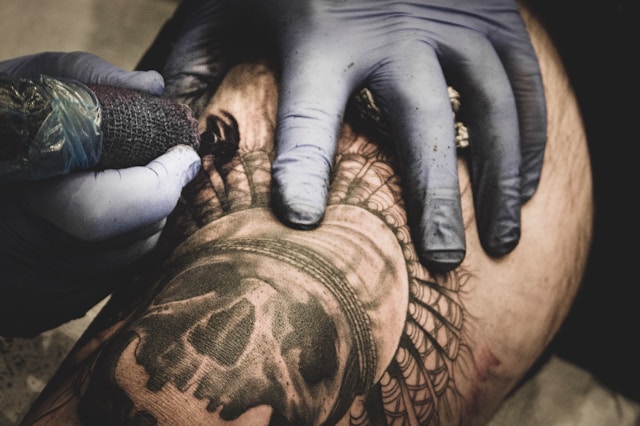
The biggest takeaway from this episode is also the easiest one to forget when you're impatient: the laser isn't the slow part of this process, your body is. That's why a thoughtful technician treats the early sessions as a setup, not a finish line, and why how many sessions of laser tattoo removal you'll need depends as much on your circulation, your health, and the placement of the tattoo as it does on the ink itself.
If you're considering removal, the smartest first step is a consultation where someone actually looks at your tattoo, asks about the placement, and gives you a realistic range rather than a sales pitch. Ask whether they start gently and ramp up, ask to see before-and-after photos of skin condition (not just ink fade), and pay attention to whether they discuss your body's healing process at all.
Patience here pays off in skin that looks like nothing was ever there. The studio that quotes you a longer timeline isn't trying to sell you more sessions. They're trying to make sure that when you're done, you're truly done.